
Frequently Asked Questions
Frequently Asked Questions
Yoga
-
Please wear comfortable clothes that you can freely move in.
If coming from work, feel free to bring these and change when you get here.
-
All yoga classes are taught in the classical tradition of T. Krishnamacharya (1888-1989). He taught several of the Yoga teachers who first brought yoga to the West (including B.K.S. Iyengar and K. Pattabhi Jois).
The approach to yoga taught at Magill Yoga Krishnamacharya developed later in his life. This was introduced to Western students principally by his son T.K.V. Desikachar (1938-2016).
This is a very student-centred and wholistic approach. Within it practices are carefully selected and adapted to best serve each person’s unique needs, interests and lifestyle.
Emphasis is placed on finding ease within postures and allowing the breath to lead movements. Teachers may also draw on any of Yoga’s 8 ‘limbs’ to enhance a student’s practice.
-
Yes - please fill out and submit this New Student Form as soon as possible.
-
No. All yoga offered at Magill Yoga is adapted to each person. The aim is to practice in a way that allows your body to gradually – and easefully – release.
-
Absolutely. You will be offered practices designed to meet you exactly as you are; and to gently enable your body to relax, open and strengthen.
-
As Janet Coutts (Lisa’s Yoga mentor) says: ‘come with an open mind and an empty belly!’
Practicing yoga is all about turning inward and tuning into your own experience. It is performative’s opposite. This means that classes provide a space that accepts you as you are, as you turn up on the day.
In classes you are also encouraged to really listen to what your body is telling you. If this means that you need to simply rest for a while, or move only very gently (with your breath), then you will be encouraged and offered guidance to do so.
Yoga
-
Please wear comfortable clothes that you can freely move in.
If coming from work, feel free to bring these and change when you get here. .
-
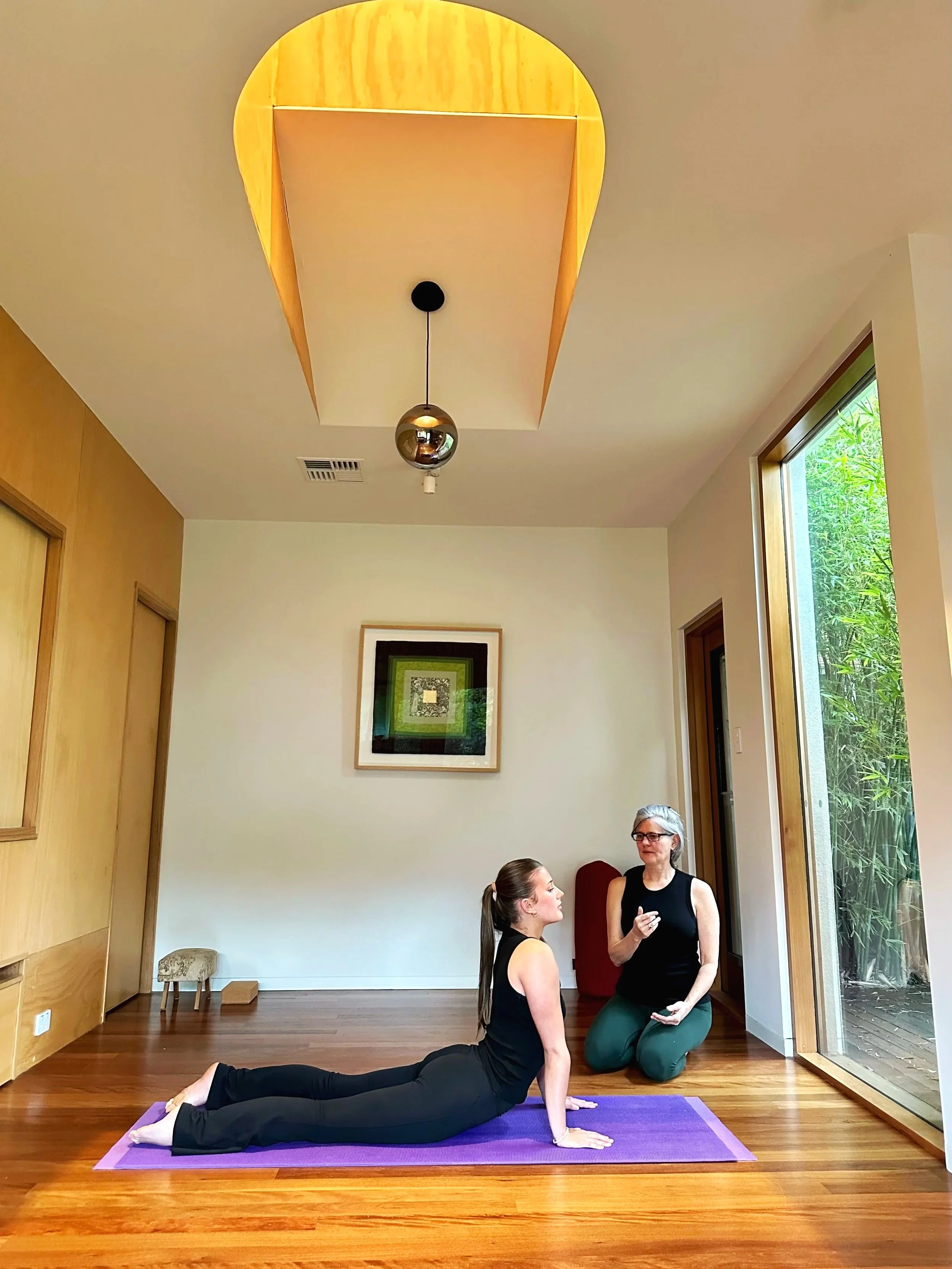
All yoga classes are taught in the classical tradition of T. Krishnamacharya (1888-1989). He taught several of the Yoga teachers who first brought yoga to the West (including B.K.S. Iyengar and K. Pattabhi Jois).
However, the style taught at Magill Yoga was developed by Krishnamacharya later in his life and was most famously introduced to Western students by his son T.K.V. Desikachar (1938-2016).
This is a very student-centred and wholistic approach. Within it, practices are carefully selected and adapted to best serve each person’s unique needs, interests and lifestyle.
Emphasis is placed on finding ease within postures and allowing the breath to lead movements and teachers may draw from any of Yoga’s 8 ‘limbs’ to enhance a student’s practice.
-
No. All yoga offered at Magill Yoga is adapted to each person. The aim is to practice in a way that allows your body to gradually – and easefully – release.
-
Yes - please fill out and submit this New Student Form as soon as possible.
-
Absolutely. You will be offered practices designed to meet you exactly as you are; and to gently enable your body to relax, open and strengthen.
-
As Janet Coutts (Lisa’s Yoga mentor) says: ‘come with an open mind and an empty belly!’
Practicing yoga is all about turning inward and tuning into your own experience. It is performative’s opposite. This means that classes provide a space that accepts you as you are, on the day.
You are also encouraged to listen to your own body. If you need to simply rest for a while in class, or move only very gently (with your breath), you will be encouraged to do so and offered guidance.
Meditation
-
Please wear comfortable and loose clothing. If coming from work, feel free to change when you get here.
Alternatively, feel free to simply loosen any tight clothes during the session.
Some people also choose to take their shoes off, and others keep them on.
-
You may have not yet found the right type of practice for you - there are many different kinds to choose from!
Also, like learning any skill it takes practice and some days will be better than others. Generally, your practice will become more effective as you become more experienced.
In the introductory sessions we will find you a short, calming technique that works for you. Being physically relaxed prior to meditation practice also makes it much easier, which is why we always do some relaxation and loosening exercises before sitting or lying down to meditate.
Practicing in a group and being guided by a person who is meditating with you, is also usually a lot easier than on your own.
All of that said, it may be that at this point in your life meditative practices that are less formal (i.e., non-sitting) - such as walking in nature (without your phone!) or physical yoga practices, or a craft or swimming - will more effectively support your wellbeing. Come and Try sessions and Introductory Consultations are a great way to find out.
-
A large range of meditative practice are offered at Magill Yoga, with a focus on promoting wellbeing. These include very short techniques for quickly finding calm and balance, and longer (~20min) guided meditations.
Most of the meditations offered are based on ones taught at Lifeflow Meditation, and generally these have been adapted from traditional Buddhist practices by Ven Dr Graham Williams (Founder, Lifeflow Meditation) and Eric Harrison (formerly of Perth Meditation Centre). These include meditations for relaxation, inner cleansing, energising and cultivating kindness.
Depending on the person other kinds of meditative practices common to Yoga and Buddhist traditions that are oriented more towards experiences of insight, absorption and/or spiritual union, may also be offered.
-
Not at all. No prior experience is assumed, and you will learn the fundamentals of how to practice in your initial session. That said, you will no doubt have already experienced meditative states spontaneously, perhaps when walking in nature, or when you were playing as a child.
Effective practice entails first setting up conducive conditions - including a relaxed body and unhurried breath - so that these kinds of states arise naturally. Meditating is not about getting it right, but rather noticing and accepting what is happening.
Meditation
-
Please wear comfortable and loose clothing. If coming from work, feel free to change when you get here.
Alternatively, feel free to simply loosen any tight clothes during the session.
Some people also choose to take their shoes off, and others keep them on.
-
You might have not found the right type of practice for you yet - there are many different kinds!
Like learning any skill, it takes practice. Some days will be better than others, and as you become more experienced, your practice will become more effective.
In the introductory sessions, we will find you a short, calming technique that works. Being physically relaxed prior to meditation practice also makes it much easier, which is why we always do some relaxation and loosening exercises before sitting or lying down.
Practicing in a group and being guided in person is usually a lot easier than on your own, especially if the person guiding is also in a meditative state.
All of that said, it may be that at this point in your life meditative practices that are less formal (i.e., non-sitting) - such as walking in nature (without your phone!) or physical yoga practices, or a craft or swimming - will more effectively support your lifestyle. Come and Try sessions and Introductory Consultations are a great way to find out.
-
Not at all. No prior experience is assumed, and you will learn the fundamentals of how to practice in your initial session. That said, you will no doubt have already experienced meditative states spontaneously, perhaps when walking in nature, or when you were playing as a child.
Effective practice entails first setting up conducive conditions - including a relaxed body and unhurried breath - so that these kinds of states arise naturally. Meditating is not about getting it right, but rather noticing and accepting what is happening.
-
A large range of meditative practice are offered at Magill Yoga, with a focus on promoting wellbeing. These include very short techniques for quickly finding calm and balance, and longer (~20min) guided meditations.
Most of the meditations offered are based on ones taught at Lifeflow Meditation, which have themselves been adapted from traditional Buddhist practices by Ven Dr Graham Williams (Founder, Lifeflow Meditation) and Eric Harrison (formerly of Perth Meditation Centre). These include meditations for relaxation, inner cleansing, energising and cultivating kindness.
Depending on the person, other kinds of meditative practices common to Yoga, Vedanta and Buddhist traditions that are more oriented towards experiences of insight, absorption and/or spiritual union, may also be taught.
Magill Yoga
-
Please text or call Lisa on 0449 176 478 as soon as you are able.
As all Yoga classes are specifically designed to cater to the needs of regular attendees, several days' notice is greatly appreciated.
-
We accept both cash and EFTPOS card payment.
-
The Magill Yoga Studio is on a side street between The Parade and Magill Road.
There are regular buses along both, and it is a five minute walk from each stop.
If you are driving, Barnes Ave is a small street with limited parking. So, if you are coming to a group class, and are able, please park on Cuthero Terrace and walk ~150m around the corner (7 houses down) to 26 Barnes Ave.
If you ride your bike, feel free to lock it up on one of the verandah posts outside the Studio.
-
Norwood Yoga House is at 73 Kensington Road, Norwood, between Sydenham Rd and Elizabeth Street.
Heading out of the city it is just before Stop 3 Kensington Rd (North Side).
There is plenty of parking on Kensington Road, but avoid peak hour restrictions. Street parking on Elizabeth St is also a good option.
If you are cycling, head down the driveway and park at the back of the building, then enter Norwood Yoga House via the front door.
-
The Vedanta Centre is on East Terrace, a residential street on the northern side of The Parade in Kensington Gardens.
If you are driving there is usually plenty of street parking nearby.
On The Parade, Bus Stops 16 (one one each side of the Road) are a few minutes walk away. Bus stops on Magill Rd are about a ten minute walk.
If you are cycling, come down the driveway to the rear of the property, past the Church building. Feel free to lock your bike to the fence or a verandah post.
Classes are held in the hall at the rear (eastern end) of the property.
Magill Yoga
-
Please call Lisa on 0449 176 478 as soon as you are able.
As all Yoga classes are specifically designed to cater to the needs of regular attendees, several days' notice is greatly appreciated.
-
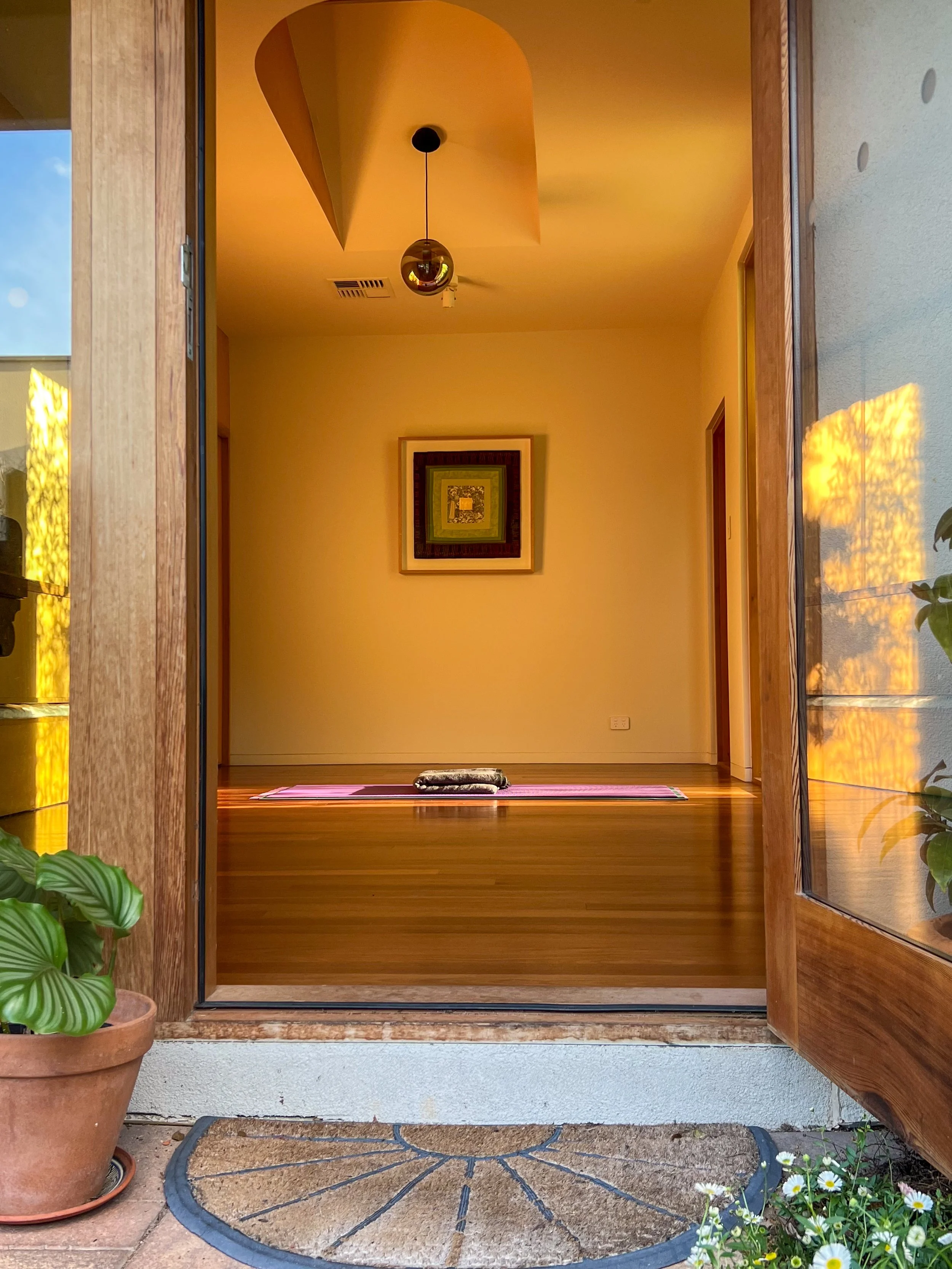
The Magill Yoga Studio is on a side street between The Parade and Magill Road.
There are regular buses along both, and it is a five minute walk from each stop.
If you are driving, Barnes Ave is a small street with limited parking. So, if you are coming to a group class, and are able, please park on Cuthero Terrace and walk ~150m around the corner (7 houses down) to 26 Barnes Ave.
If you ride your bike, feel free to lock it up on one of the verandah posts outside the Studio.
-
Norwood Yoga House is at 73 Kensington Road, Norwood, between Sydenham Rd and Elizabeth Street.
Heading out of the city, it is just before Stop 3 Kensington Rd (North Side).
There is plenty of parking on Kensington Road, but avoid peak hour restrictions. Street parking on Elizabeth St is also a good option.
If you are cycling, head down the driveway and park at the back of the building, then enter Norwood Yoga House via the front door.
-
The Vedanta Centre is on East Terrace, a residential street on the northern side of The Parade in Kensington Gardens.
If you are driving, there is usually plenty of street parking nearby.
Bus Stops 16 on The Parade (North and South) are a few minutes walk away. Bus stops on Magill Rd are about a ten minute walk.
If you are cycling, come down the driveway to the rear of the property, past the Church building. Feel free to lock your bike to a car port post.
Classes are held in the hall at the rear (eastern end) of the property.